Fitness
Why Fitness Still Leaves People with Disabilities Behind — And What Needs to Change
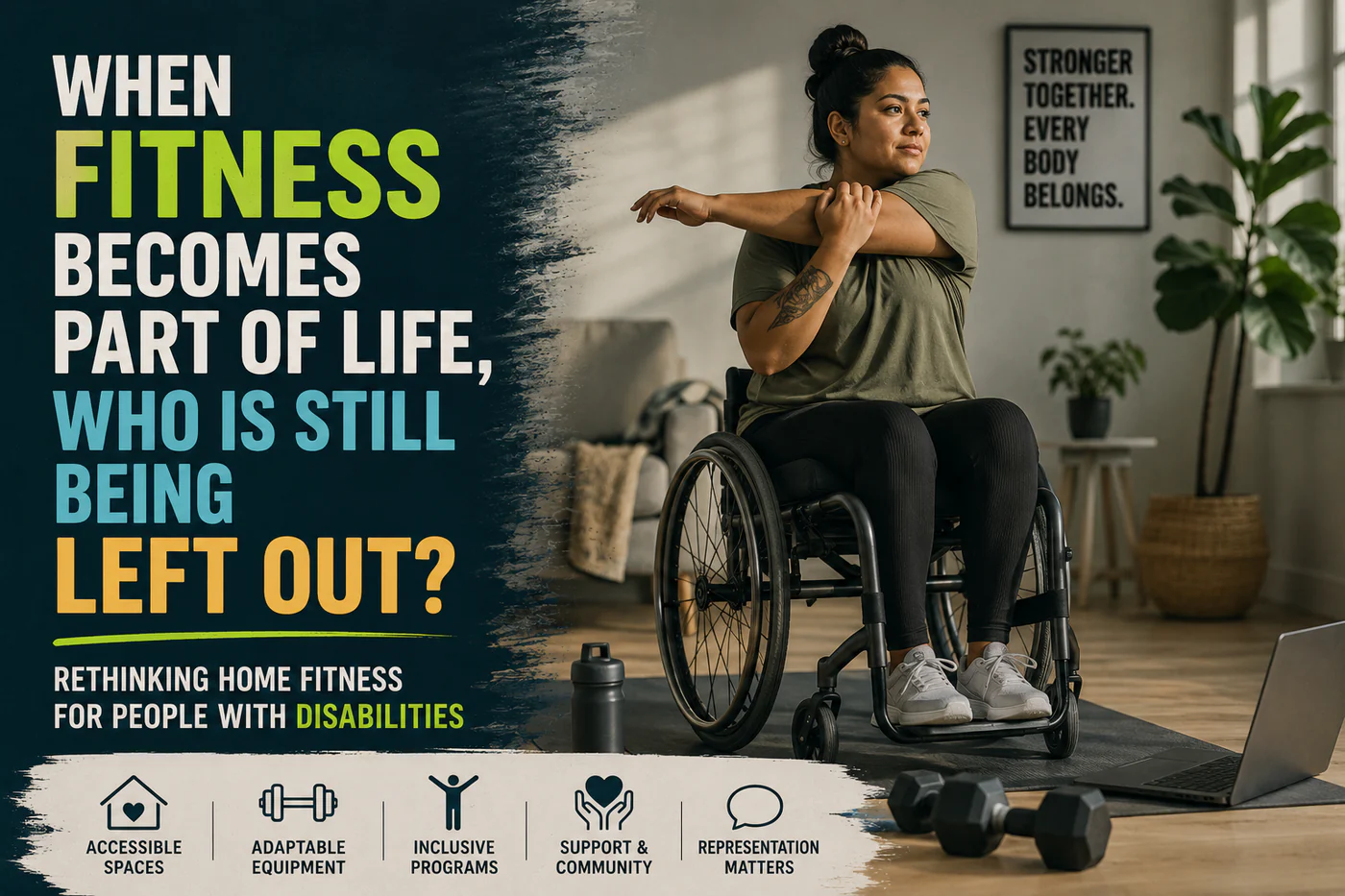
When we talk about making fitness more accessible, we tend to focus on time, cost, and convenience. Those barriers are real — but there’s a group that rarely enters the conversation at all: people with physical disabilities, limited mobility, or impaired limb function.
Home-based exercise adherence research has helped many people rethink their relationship with fitness. But even the most progressive conversations about inclusive fitness often stop short of addressing the people who need thoughtful design the most.
This article is an attempt to go further.
The Numbers Are Hard to Ignore
This isn’t a small or niche population.
According to the World Health Organization, over 1.3 billion people worldwide live with some form of disability — roughly 16% of the global population. A significant portion of those disabilities involve movement, joints, or neuromuscular function.
In the United States specifically:
- About 26% of adults live with a disability
- Nearly half of those disabilities are related to mobility limitations
- More than 60% of adults with disabilities report getting insufficient physical activity
That last number is the one worth sitting with. It’s not a reflection of disinterest or low motivation. It’s a reflection of how few genuinely usable options exist.
Why Commercial Gyms Fail This Population
On the surface, a well-equipped gym looks like it should work for everyone. In practice, it often doesn’t — and the barriers go deeper than wheelchair ramps and accessible parking.
Movement is assumed to be symmetrical. Most machines are engineered for able-bodied users with full bilateral function. For someone with limb loss, restricted range of motion, or significant imbalance, many pieces of equipment are simply unusable — not uncomfortable, unusable.
Safety risks are underestimated. For people with balance issues or slower reaction times, a small misstep in a gym environment doesn’t just mean discomfort. It can mean serious injury.
The psychological environment is often hostile. Mirrors, observation, comparison, and an unspoken performance culture make gyms stressful rather than supportive for many people with disabilities.
Specialized guidance is rare. Most personal trainers are educated to maximize performance in healthy bodies, not to safely adapt movement for people with significant physical limitations.
The result is predictable: people with disabilities are quietly excluded from the mainstream fitness system — not because they chose to opt out, but because the system was never designed with them in mind.
Is Home Fitness the Answer? Not Automatically.
Home fitness solves some of these problems — privacy, flexibility, the absence of social pressure. For many people with disabilities, removing the public gym environment alone is meaningful.
But home fitness introduces its own barriers:
- Free weights can be genuinely unsafe for asymmetrical or unstable bodies
- Many home devices are poorly adjustable or designed around a single movement pattern
- Most equipment assumes a complete, balanced, bilateral body
- Safety structures and support redundancy are often absent entirely
So the question isn’t simply “can people with disabilities work out at home?” Many can. The deeper question is whether home fitness has ever been intentionally designed for them. In most cases, the honest answer is no.
What Thoughtful Design Actually Looks Like
Designing fitness solutions for people with disabilities isn’t a niche engineering challenge — it’s human-centered design under real-world constraints. And here’s what’s worth knowing: when a system is built to work for the most complex users, it almost always works better for everyone.
Safety before intensity. Controlled resistance, smooth load transitions, and stability that doesn’t require the user to compensate — these aren’t accommodations. They’re good design. Research shows that low-to-moderate, repeatable resistance training significantly improves strength, joint stability, and confidence in people with mobility limitations.
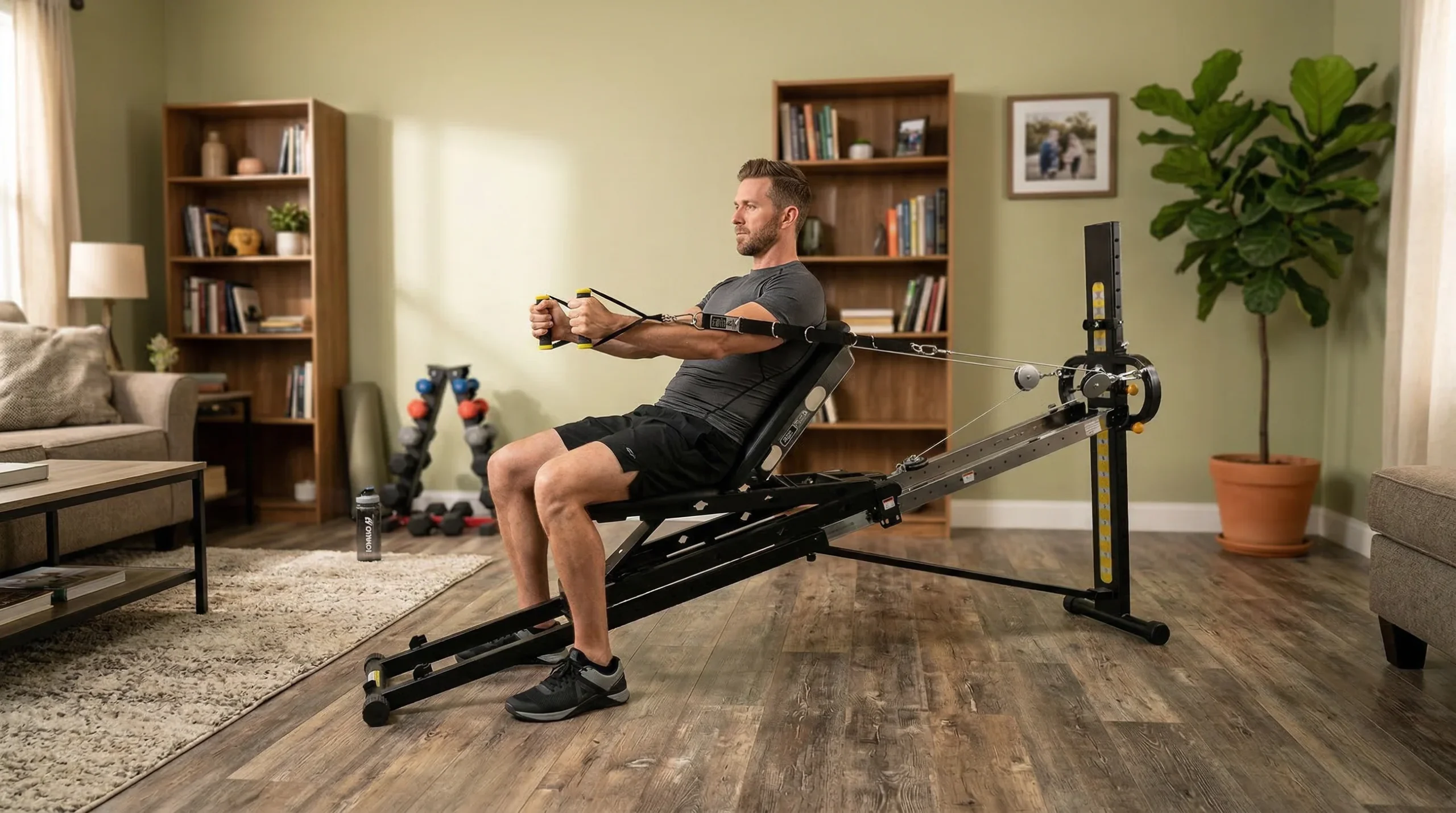
Support structures matter more than variety. Stable anchor points, multi-angle support, and the ability to train seated, semi-reclined, or with assistance are often what makes movement possible in the first place.
Resistance needs to be precisely adjustable. For many people with disabilities, strength is asymmetric and capacity varies from day to day. Equipment that only adjusts in large increments makes consistent, progressive training nearly impossible.
Asymmetrical training must be supported. Traditional equipment assumes both sides of the body work the same way. Reality doesn’t. Genuinely inclusive equipment needs to allow single-side training, offset resistance, and alternative movement paths.
Psychological safety is not a bonus feature. Studies consistently show that perceived safety and emotional comfort significantly improve long-term exercise adherence. For someone who has already been made to feel unwelcome in fitness spaces, feeling physically and emotionally safe isn’t a nice-to-have — it’s the prerequisite for showing up at all.
Who Has Fitness Really Been Designed For?
It’s a fair question. Commercial fitness has historically prioritized young, able-bodied people with high energy, predictable schedules, and a comfort with public performance. That has never been the majority of people.
People with disabilities are the clearest example of who gets left out — but they’re far from the only ones. Older adults, people recovering from surgery, people managing chronic conditions, people experiencing gradual physical decline — all of them exist at the edges of a system that wasn’t built with them in mind.
They don’t need fitness less than anyone else. In many cases, they need it more.
The Question That Started This
This article grew out of an email from a disabled military veteran. He wasn’t asking how to get stronger or faster. He was asking something far more fundamental:
“Is there a place where I can start safely?”
That question should be at the center of how we design fitness — not as an edge case, but as the baseline. When we rethink exercise through the lens of disability and real physical limitation, we’re not lowering the bar. We’re returning to the actual purpose of health: to help people live better, more fully, with more confidence and less pain.
Fitness shouldn’t be a filter. It shouldn’t reward only those who are already fortunate.
The most thoughtful fitness systems aren’t louder, harder, or more extreme. They’re safer, more adaptable, and built around the full range of human experience.
A Gentle Next Step
If you or someone you care about has felt pushed out of traditional fitness spaces — whether because of physical limitation, injury, age, or simply the way those environments feel — you’re not alone, and you’re not out of options.
The MOMO Training Hub includes movement options designed for a wide range of bodies, abilities, and starting points. It’s a good place to explore what’s actually possible — at your own pace, in your own space.
KEEP READING