Fitness
Why You Can’t Stick to Fitness — And Why It’s Not a Discipline Problem
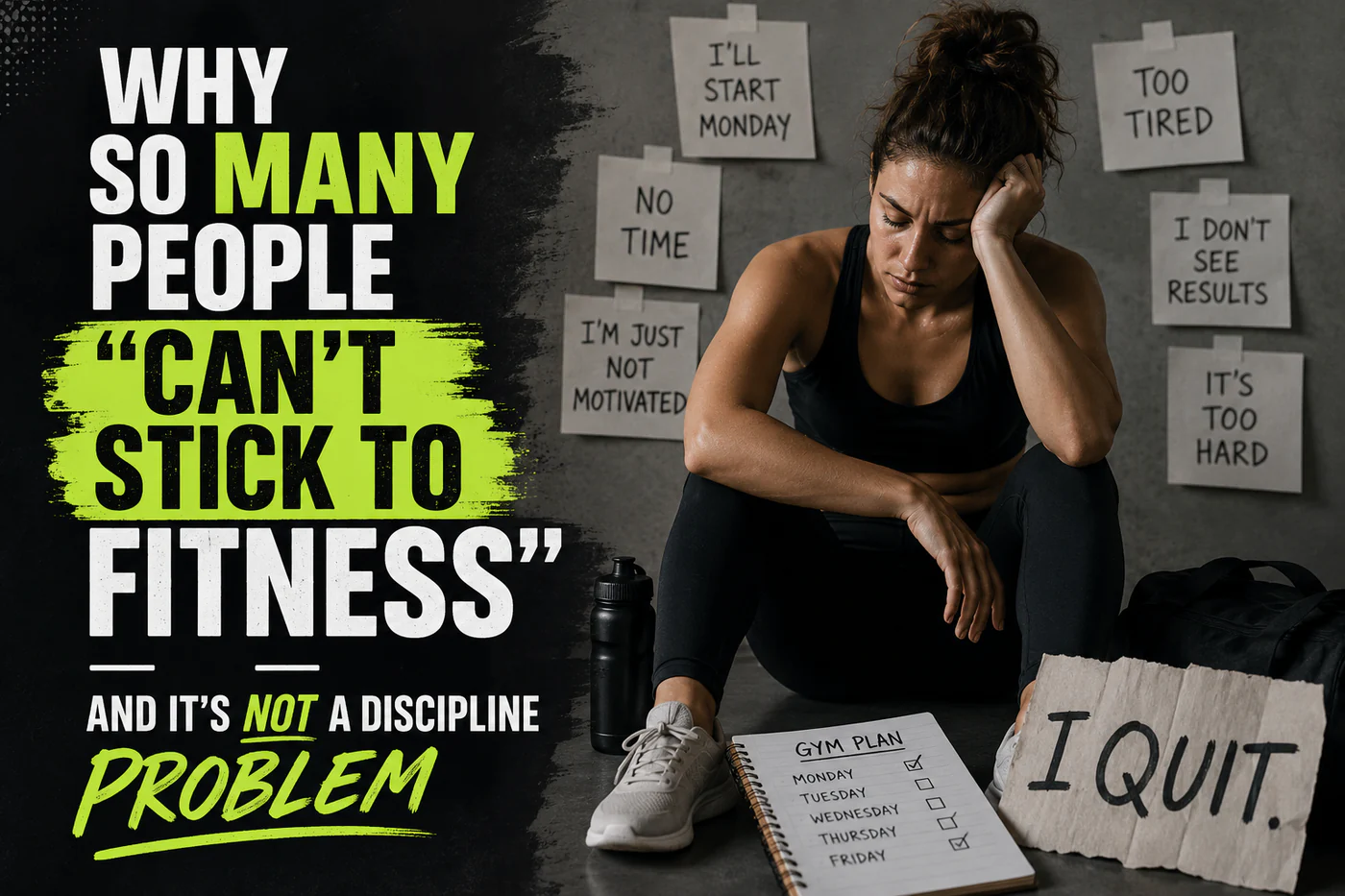
If you’ve ever started a workout routine full of motivation — only to watch it fade a few weeks later — you’re not alone. Most people quietly blame themselves for this cycle. Not disciplined enough. Not consistent enough. But what if the real issue has nothing to do with willpower? Research on home-based exercise adherence suggests the problem is far more structural — and far more fixable — than we’ve been led to believe.
The Gym Was Never Designed for Real Life
Commercial gyms are built around a very specific kind of person: someone with a flexible schedule, predictable energy levels, no caregiving responsibilities, and a clear physical goal. That profile fits a narrow slice of the population.
For everyone else — parents, caregivers, adults juggling work and family, people over 35 whose energy and time fluctuate — the traditional gym model creates constant friction.
Multiple consumer behavior studies have found that over 60% of gym members stop going regularly within the first six months, and nearly half stop within just three months. That’s not a motivation problem. That’s a structural mismatch between how the system is designed and how real lives actually work.
When a health routine requires you to constantly fight your daily reality, quitting isn’t a personal failure. It’s a design failure.
Fitness That Competes With Life Rarely Wins
Think about what a standard gym session actually demands:
- Commute time, both ways
- Waiting for equipment during peak hours
- A fixed, often intense workout structure
- Noise, social pressure, and an unwritten performance culture
- Energy levels that have to match the schedule — not the other way around
For anyone managing a household, raising children, or simply moving through a demanding week, that list doesn’t feel like a health plan. It feels like another obligation.
Research consistently shows that convenience and accessibility are the strongest predictors of long-term exercise adherence — not motivation, not intensity, not even the quality of the workout itself. In other words, the easier movement is to start, the more likely it continues.
Why Home-Based Exercise Adherence Is Higher — And What the Research Says
Studies on home-based exercise programs consistently show stronger long-term adherence rates compared to gym-based programs, particularly among adults over 35 and people with family responsibilities. The reasons aren’t complicated:
- No travel time means fewer barriers to starting
- Movement can happen in short windows — 10 minutes in the morning, 15 minutes after dinner
- There’s no audience, no performance pressure, no judgment
- The routine bends to the day instead of the other way around
This is the core insight that changes things: health that adapts to life lasts longer than health that demands sacrifice from it.
Not All Home Fitness Solutions Are Equal
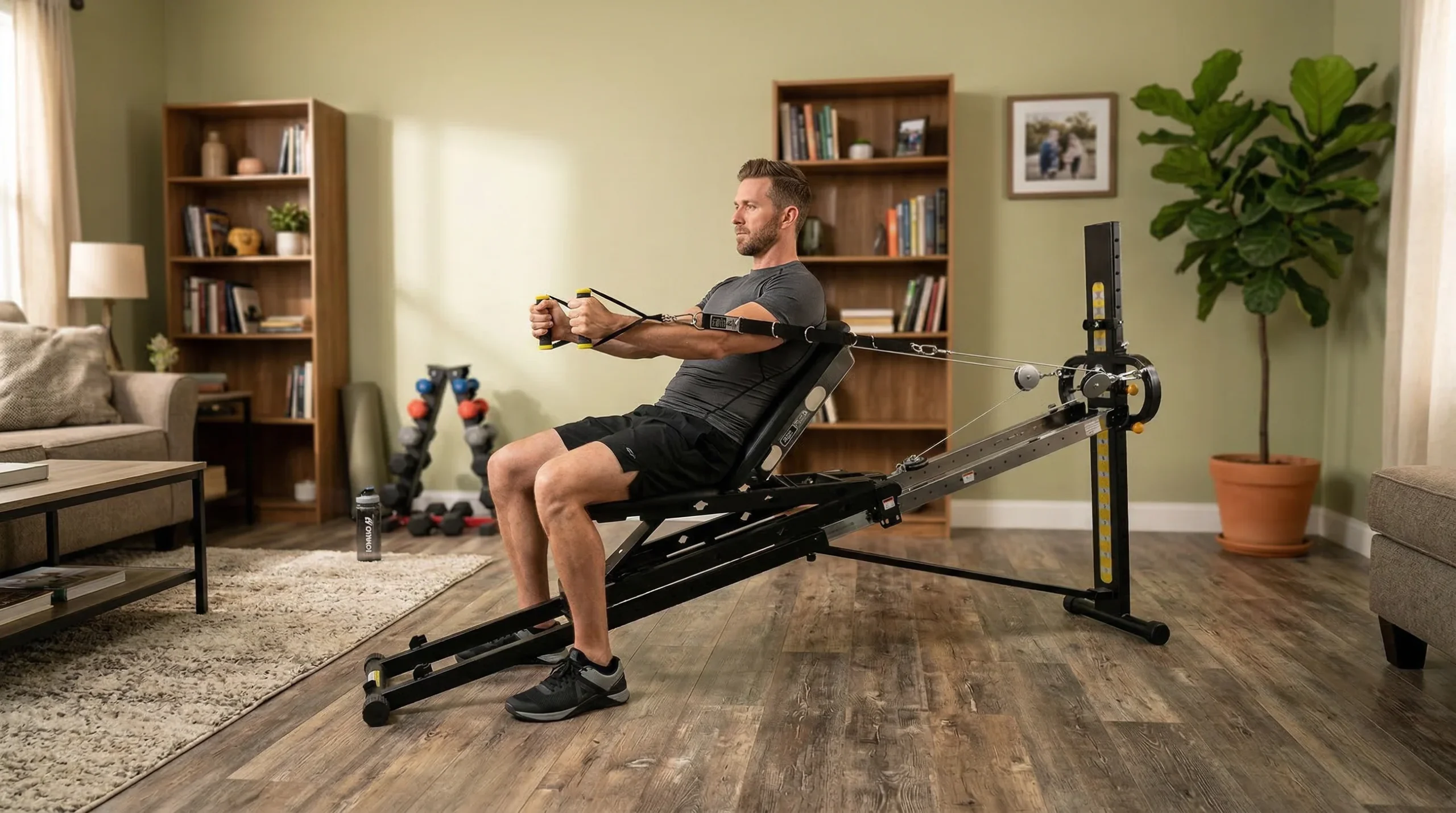
It’s worth being honest about this: a box of resistance bands and a couple of YouTube videos can only take someone so far. Many people have tried the small-gadget route and felt the familiar frustration when progress stalls or variety runs out.
What makes a home fitness setup actually sustainable comes down to a few key qualities:
- Adjustable resistance — so it grows with you over time
- Support for a wide range of movement — strength, cardio, flexibility, and everything in between
- Safe and accessible for different fitness levels and ages
- Minimal space requirements and no complicated setup
- Intuitive enough that starting doesn’t feel like a project
When equipment is designed around real people rather than ideal athletes, the experience of using it changes. It stops feeling like a performance and starts feeling like a normal part of the day.
Long-Term Health Is Built on Quiet Repetition, Not Intensity
There’s a cultural story we’ve absorbed about fitness: that it has to be hard, sweaty, and impressive to count. That anything gentle or brief isn’t really doing anything.
That story has kept a lot of people stuck.
In reality, long-term health isn’t built on peak performances. It’s built on:
- Showing up consistently, even briefly
- Moving in ways that feel sustainable, not punishing
- Building confidence gradually over time
- Choosing routines that fit into life, not ones that disrupt it
A parent moving for 15 minutes while a child plays nearby. An older adult staying strong without fear of injury. A busy professional catching a quiet session before the house wakes up. None of it is dramatic. All of it matters.
When fitness stops feeling like a project and starts fitting into the rhythm of a normal day, it stops being something you have to push yourself to do — and becomes something you simply do.
A Note on Guilt
If you’ve felt bad about stopping before, it’s worth sitting with this: the system you were trying to fit into wasn’t designed for your life. That’s not an excuse — it’s context. And context matters when you’re trying to figure out what to do differently.
A Gentler Question Worth Asking
If your current approach to fitness hasn’t lasted — or never quite got started — maybe the question isn’t “What’s wrong with me?”
Maybe it’s:
Is there a way to make movement fit my life instead of fighting it?
That question, asked honestly, tends to lead somewhere useful. It shifts the focus from discipline and willpower toward design and fit. And often, the most important step toward better health isn’t doing more — it’s finding something that finally works with who you actually are and how you actually live.
Want to explore what that could look like?
The MOMO Training Hub is a good place to start — it’s built around real people with real schedules, and covers everything from gentle beginners’ movement to more progressive strength and cardio work. No pressure, no performance. Just movement that fits.
KEEP READING