Fitness
Gym vs. Home Fitness for Women Over 40: Why Home Usually Wins
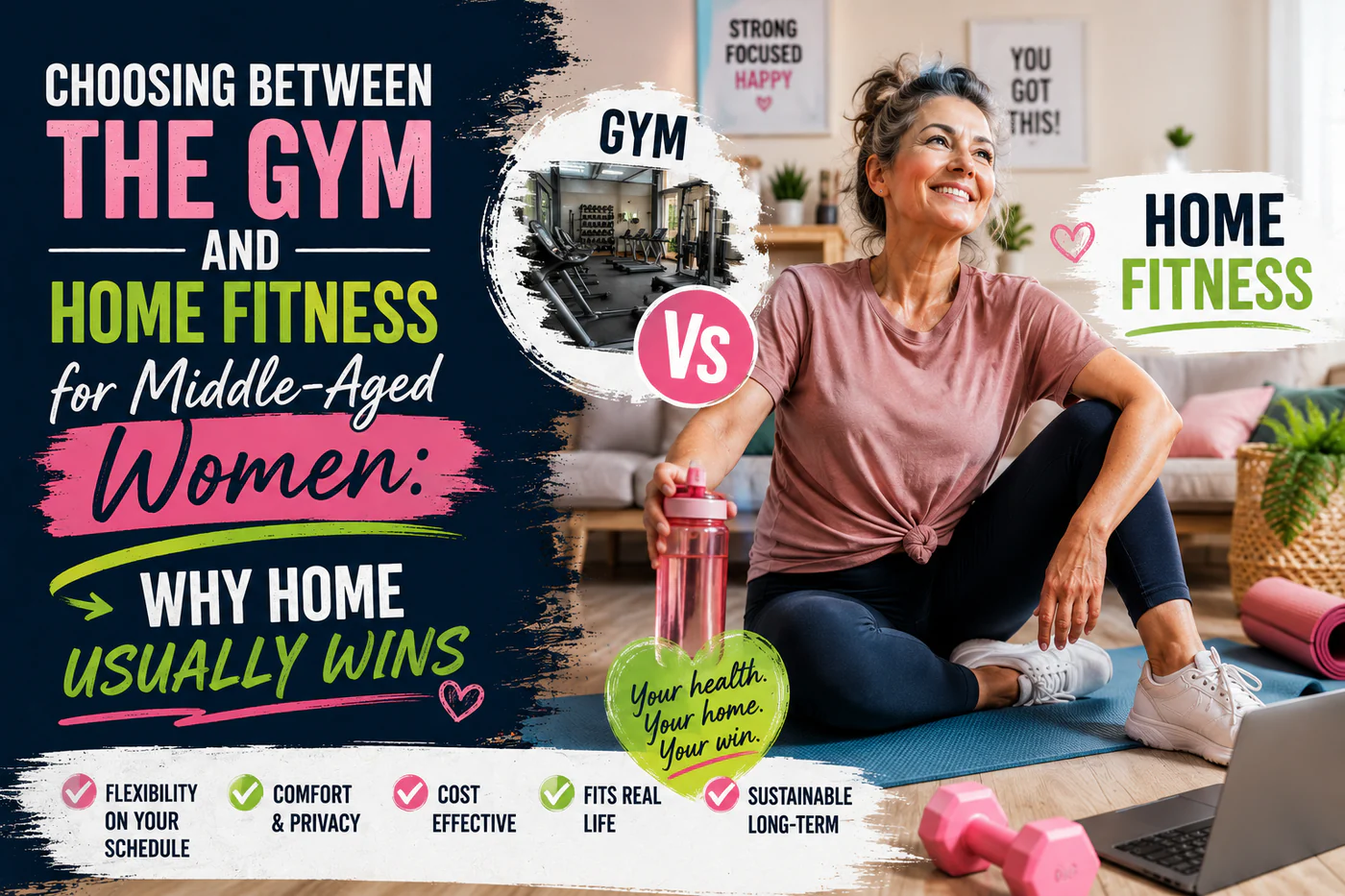
For women over 40, the question isn’t whether to exercise — it’s where you can actually stick with it. Here’s why home fitness usually wins.
When it comes to fitness for women in their 40s and beyond, the real question isn’t “Can you work out?” It’s “Where can you actually stick with it?” Commercial gyms look the part — equipment, trainers, energy. But real life rarely matches that environment. And for most middle-aged women, that gap is where consistency quietly dies.
The reality of life in your 40s and beyond
Most women navigating midlife are managing a lot at once: family responsibilities that don’t pause for workout schedules, work pressure that eats into mornings and evenings, hormonal changes that affect energy, mood, and recovery, joint sensitivity that makes high-impact movement riskier, and time that arrives in small, unpredictable windows.
Fitness has to fit that life — not compete with it. Any system that requires the stars to align before you can show up is a system most women will eventually stop showing up for.
The psychological case for home fitness
Studies show that over 55% of women aged 40 and older feel self-conscious in public workout spaces. Bright lights, mirrors, the unspoken comparisons — for many women, gyms aren’t motivating environments. They’re stressful ones.
At home, that pressure disappears entirely. No audience, no judgment, no performance. Just you, your body, and your own pace. That shift in environment isn’t minor — it’s often the difference between someone who exercises regularly and someone who keeps meaning to.
When fitness stops feeling like a performance, it finally has a chance to become a habit.
What’s happening in the body after 40
The physical changes of midlife are real and worth understanding — not as limitations, but as context for smarter choices. Muscle mass drops approximately 3–8% per decade without resistance training. Joint recovery slows, making high-intensity sessions harder to bounce back from. Balance and flexibility need more dedicated attention. And injury risk rises when movements are rushed or load is poorly controlled.
Commercial gyms are largely built around intensity. Home fitness can be built around safety, control, and progressive improvement — which is exactly what this stage of life calls for.
What the data says about consistency
This isn’t just anecdotal. Research on exercise adherence in midlife consistently points in the same direction. People who exercise at home are roughly twice as likely to stay consistent after age 45. Short, frequent sessions are more sustainable than long, exhausting ones. Balance and light resistance training can reduce fall risk by up to 40%. And consistency matters far more than intensity for long-term health outcomes.
The goal isn’t to push harder. It’s to keep going.
Home fitness fits family life better
For women with caregiving responsibilities — whether for children, parents, or partners — the logistics of a gym trip add up fast. Home fitness removes most of those friction points. No commute, no parking, no scheduling around childcare. You can pause when someone needs you and come back. Equipment can be shared with family members of different ages and abilities. And 10 minutes counts. 20 minutes counts. Stopping early counts.
That last point matters more than it sounds. Removing the guilt around imperfect sessions is one of the most powerful things home fitness offers. And guilt, more than anything else, is what kills long-term consistency.
Not all home fitness equipment is created equal
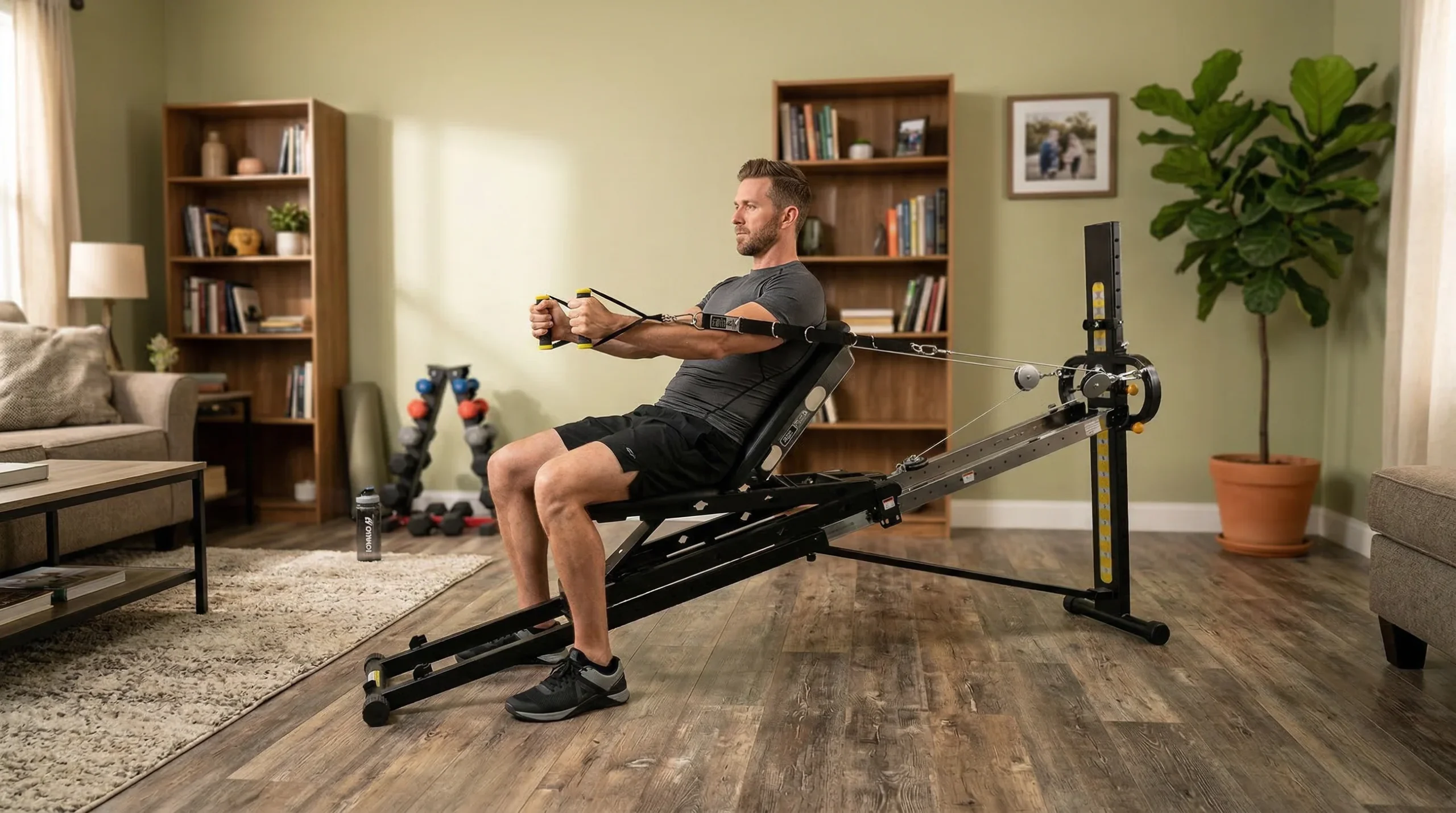
It’s worth being honest: many home fitness tools fail women in midlife for predictable reasons. They’re too simple to support meaningful progression over time. Too bulky to realistically live with in a shared home. Too limited in range to address strength, cardio, flexibility, and balance together. And rarely designed with joint sensitivity and safety in mind.
A home fitness setup that actually works for this life stage needs to be safe first, adjustable, compact, quiet, and usable across different fitness levels — including other family members. When equipment is designed around real people rather than ideal athletes, it has a chance of actually being used.
This isn’t about gyms being bad
Gyms work well for a specific kind of person at a specific kind of moment. That’s genuinely fine. But they weren’t designed around the realities of middle-aged women’s lives — and most of them still aren’t.
Home fitness wins for this population because it protects dignity and removes the performance pressure. It respects time by meeting you where you are. It adapts to changing energy levels and recovery needs. It supports safety without sacrificing effectiveness. And it stays accessible even on the hard days.
Midlife fitness isn’t about pushing harder. It’s about building something that doesn’t push you away.
And most of the time, that place is home.
A gentle next step
If you’ve been looking for a way to move that actually fits your life — your schedule, your body, your energy levels — the MOMO Training Hub is a good place to start. It’s built for real people at real stages of life, with options that grow with you rather than demand you keep up with them.
KEEP READING